

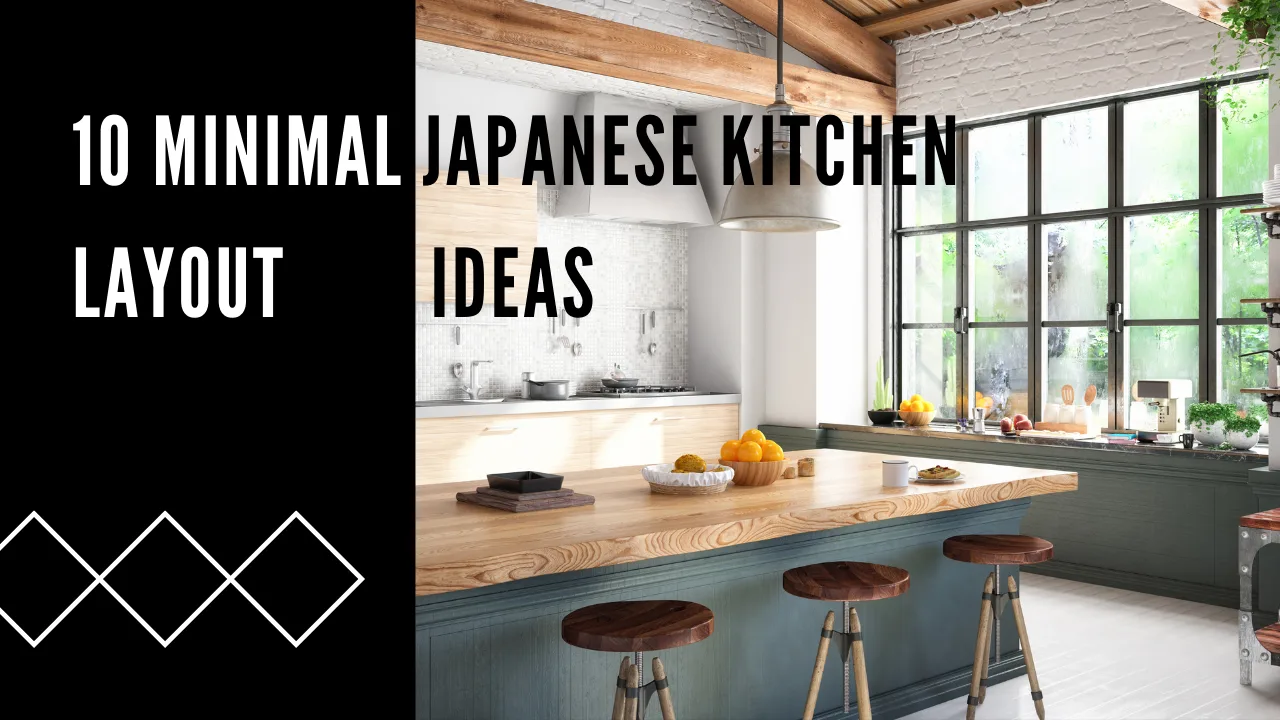
Modern kitchens don’t need to be loud or over-designed to feel beautiful. In fact, the most comfortable kitchens today are the ones that feel simple, शांत (calm), and easy to use every day.
Minimal Japanese kitchen design follows this exact idea. Instead of filling the space with too many elements, it focuses on clarity, balance, and daily comfort—making even small kitchens feel open and thoughtfully designed.
If you’re planning a compact kitchen or just want a more peaceful space, these ideas can help you create a kitchen that truly feels light and functional.
Why Minimal Japanese Kitchens Feel So Different
Unlike traditional modern kitchens that focus on appearance, Japanese layouts are built around daily movement and ease.
Everything has a purpose.
Everything has a place.
And because of that, the kitchen feels organized without trying too hard.
1. Let Function Be the Main Highlight
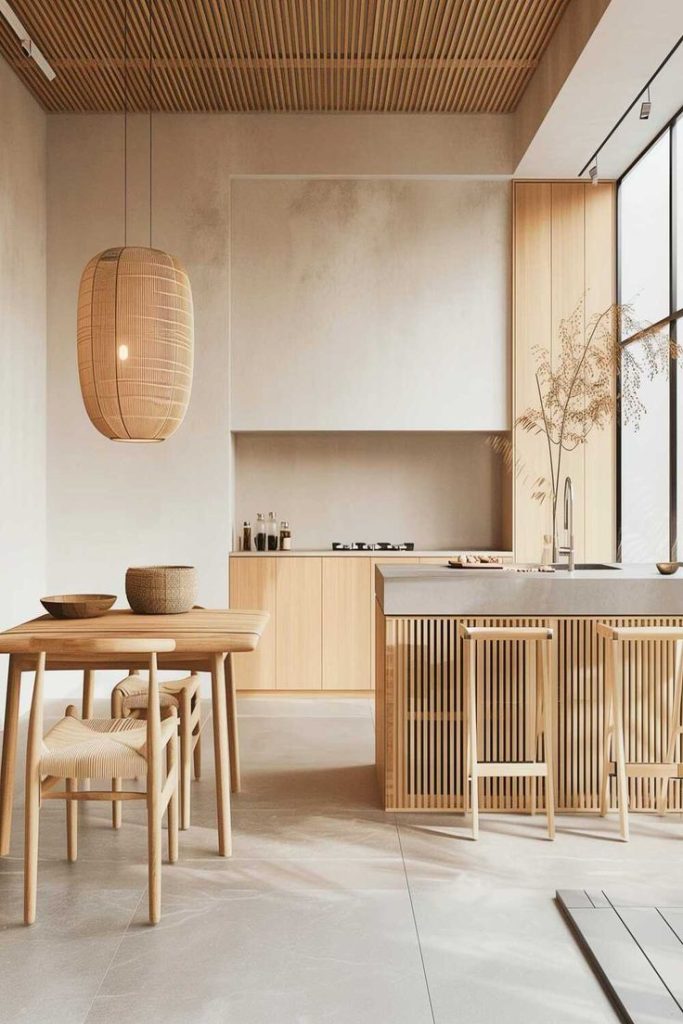
Instead of decorating your kitchen, let useful elements stand out naturally.
A clean prep area, a wooden chopping board, or a neatly arranged sink can become the visual focus—without adding extra decor.
2. Use a Straight (I-Shaped) Layout for Small Spaces
For compact homes, a single-wall kitchen works beautifully.
All essentials—sink, stove, and storage—stay in one line, making the space feel:
- Open
- Easy to move in
- Less cluttered
Perfect for apartments and modern small homes.
3. Add Light Wood for a Natural Feel
Light wood instantly makes a kitchen feel warmer and more relaxed.
Use it in:
- Cabinets
- Shelves
- Counter accents
When paired with neutral walls, it creates a soft and balanced look.
4. Keep Colors Soft and Neutral
Avoid bold colors. Instead, go for shades like:
- Off-white
- Beige
- Soft grey
These tones reflect light better and make the kitchen feel bigger and more peaceful.
5. Hide Storage to Keep Surfaces Clean
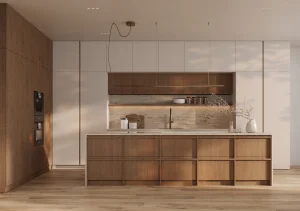
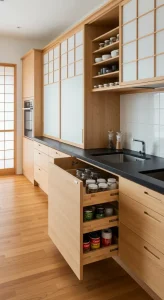
A calm kitchen is a clutter-free kitchen.
Use:
- Deep drawers
- Closed cabinets
- Hidden pantry units
When everything is stored properly, your countertops stay clear and easy to manage.
6. Use Flexible, Movable Storage
Japanese kitchens often include small movable elements like:
- Rolling carts
- Stackable racks
These help you adjust your space easily without making it feel fixed or heavy.
7. Keep Work Areas Close Together
A smart layout reduces unnecessary movement.
Place:
- Sink
- Stove
- Prep area
close to each other so cooking feels faster and smoother.
8. Choose Handle-Free Cabinets
Flat, handle-less cabinets create a clean and uninterrupted look.
They also make small kitchens feel:
Visually calm
Bigger
More modern
9. Use Soft, Warm Lighting
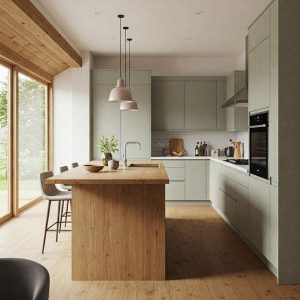
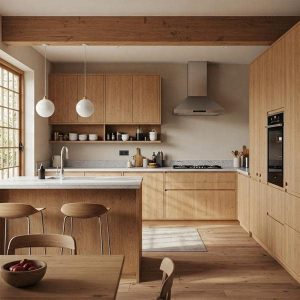
Harsh white lights can make a kitchen feel stressful.
Instead, choose:
- Warm ceiling lights
- Under-cabinet lighting
This creates a relaxed atmosphere, especially in the evening.
10. Add Floating Shelves with Intention
Floating shelves work best when they are not overcrowded.
Display only a few useful items like:
- Cups
- Bowls
- Glass jars
Leaving empty space keeps the kitchen feeling light and breathable.
Final Thought
A minimal Japanese kitchen is not about having less—it’s about having only what you need, in the right place.
When your kitchen is simple and organized, everyday tasks feel easier, and the space naturally feels more peaceful.
And that’s what makes this design truly timeless.



Leave a Reply